

Muji Interior Design in Singapore: HDB & Condo Ideas (2026)
Muji style is the design equivalent of owning fewer, better things. Light wood, off-white walls, modular storage, and almost nothing that exists purely to be looked at.
It has become one of the most requested directions for Singapore homes, and the reason is practical rather than aesthetic. In a flat with a fixed footprint, a style built around storage systems and clear surfaces solves a real problem. This guide covers what Muji design actually involves, how it differs from Japandi and minimalism, and how it works across HDB flats and condos, with real AC Vision homes for each.

Sky Habitat Condo @ 7 Bishan Street 15
What is Muji Interior Design?
The Muji-style interior design is minimalist-inspired and blends simplicity, functionality, and style to give your home or space a cosy, tranquil, and tasteful aesthetic. This decor style aims to create a relaxing and peaceful living space by focusing on space maximisation and efficiency, using neatly styled furniture, and incorporating nature into your home. The Muji interior design concept is deeply rooted in the Japanese culture of Zen living, which prioritises a minimalist lifestyle.
The word Muji comes from Mujirushi Ryōhin (無印良品), the full name of the Japanese retailer behind the brand, which translates to "no-brand quality goods." The philosophy believes in three things: strip away the logo, the excess packaging, and the ornamentation. Then let the product's own usefulness carry it. This is exactly what our expert interior designers mean when they blurt out the word "Muji-style" home.
If you ask me, the design is quite different from Japandi, which blends Scandinavian and Japanese aesthetics. Muji-style draws more narrowly from Japanese Zen minimalism and MUJI's own no-frills design language. In essence, the principle is to keep a space simple without making it seem bare.
Muji vs Japandi vs Minimalist: What's the Difference?
These three design styles often get used interchangeably, and they overlap heavily, but there are differences among them primarily based on what they emphasise.
Minimalism is about restraint. It tells you to identify what you can remove, and its primary concern is about how a room feels with less elements. The result is a calm, minimalist home that can still be impractical if the storage isn’t planned right.
Muji is about functionality and organisation. It asks where everything goes and what its functionality is, then designs around that. For example, modular storage is an integral part of MUji design where everything is easily accessible instead of hidden. It features a warmer colour palette and the materials are more tactile.
Japandi is a blend of Japanese restraint and Scandinavian warmth. It leans on darker hues, uses matte black accents and more contrast, and puts more weight on craftsmanship. Where Muji is quiet and functional, Japandi is curated and designed for relaxed living.
Most Singapore homes end up somewhere between the three styles. If you want the flat to feel calm, choose minimalist. If you want it to stay tidy with children in it, opt for Muji. If you want it to feel designed, choose Japandi.
We cover both minimalist interior design and Japanese Zen design in more detail.
Features of the Muji Interior Design
What is it that makes the zen-inspired decor unique? Key features make this layout stand out from other designs. To create this layout in your home, the following features must be considered:
1. Minimalism
The minimalist approach's central dogma is less is more, and this is a key component in Muji-style interior design. This layout employs the simplest and fewest materials to achieve a simple yet aesthetic effect. It involves only possessing what is necessary to keep your space clutter-free.
2. Functionality
Functionality is what separates the Muji theme interior design from other minimalist designs. Every piece of furniture, equipment, and appliance is a functional unit of the home, i.e., it performs a specific function or purpose to create a highly functional space. Furniture for a Muji-style interior design is selected based on its utility, function, and space efficiency. This will not only help maximize the available space but also create an aesthetically appealing space.
3. Versatility
This involves making the most of every space and item in the home. Versatility plays a crucial role in this decor style because it allows for adaptability to a variety of functions, such as the use of multi-functional furniture (adjustable furniture). With versatility, you can effortlessly transform your living space into whatever you want at the moment, making life easier for you.
4. Use of natural materials
The uniqueness of this decor lies in its use of natural materials, such as wood, stones, bamboo, fabrics, and rattan. This gives your home a natural and comforting atmosphere.
5. Zen-like atmosphere
A zen-like ambience reflects the essence of a muji-inspired interior design. It creates a relaxing and peaceful environment by emphasising simplicity, asceticism, subtlety, and tranquillity in your space.
Applying the Muji Interior Design in All Rooms of Your Home
The Japanese minimalist style can be applied to different areas of the home to create a relaxing and tasteful atmosphere. Some parts of the home where it can be applied include the living room, bedroom, kitchen, bathroom, office, etc.
Muji Style Interior Design Living Room
It is a simple yet classy and tasteful living room with nearly styled and minimal furnishing and a spacious atmosphere with minimal decorations and accessories. Here are some tips to achieve a clean-lined living room:
Keep it simple and spacious: The Zen-inspired decor is known for its maximum use of space and spacious view. Keep only necessary items and invest in space-saving storage solutions.
Use neutral colours: cream, beige, white, and grey are shades mainly used in this decor style. These colours give a sense of nature and are pleasant to the eyes. Neutral colours add elegance and earthiness to your home, making it more inviting and comfy.
Use white shades for your walls. This brightens up the room and gives it a pristine feel. Cream and beige could be used for the furniture, creating contrast and adding flair to your living room.
Furniture: The living room should be neatly styled, streamlined, functional, and versatile. Also, furniture shouldn't take up much space and there should be storage incorporated throughout.
Use flowers and plants as accessories: A minimalist-style living room wouldn't be complete without a touch of nature. The greenery creates an air of serenity, purity, and warmth in the room. To accentuate the aesthetic, place a few potted plants or flowers in strategic places.
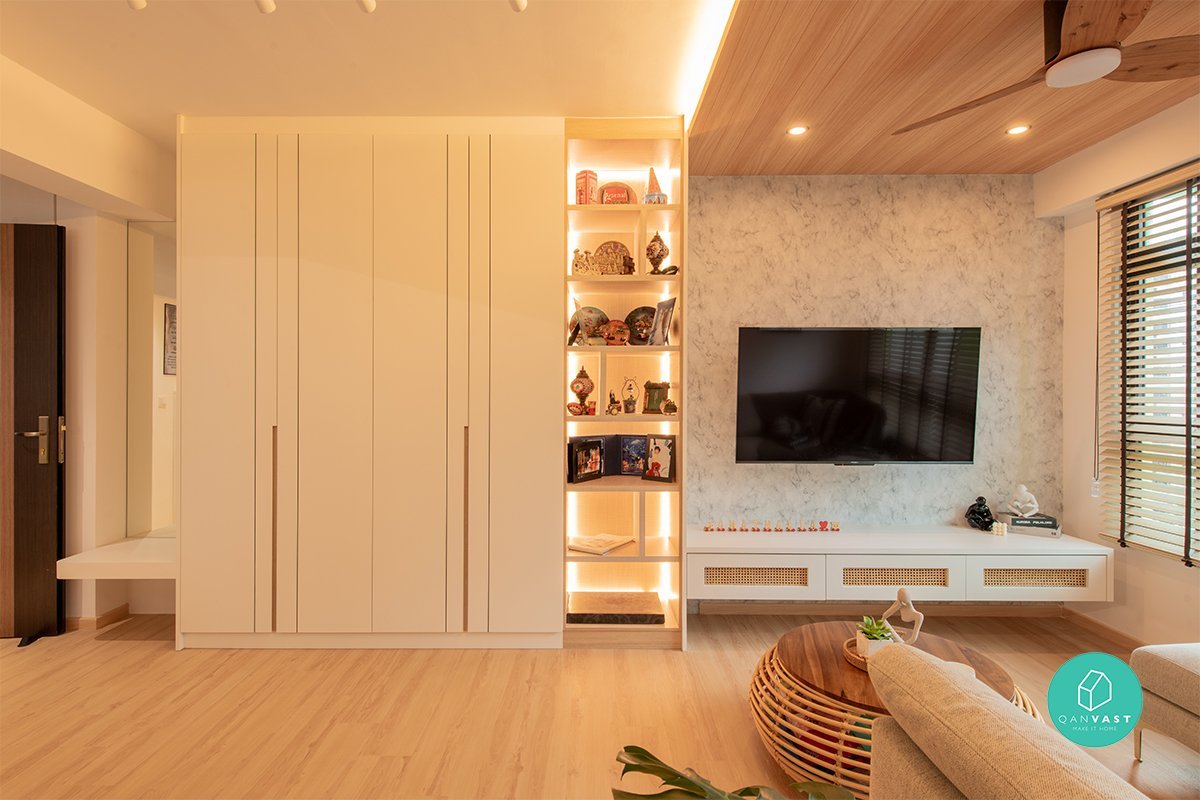
As can be seen in the following image from out portfolio 799B Woodlands Drive 60, everything has a place to go to leave the room feeling airy, spacious, and relaxed.
Applying a Muji-style Interior Design in the Bedroom
Muji interior design bedrooms will turn your plain-looking bedroom into a cosy and tasteful haven. As you can see, there is absolutely nothing in the room that would overwhelm the space or make you feel crowded by furniture. You will also notice that the plants add a light touch of biophilic freshness to the overall aesthetics.
Here are some tips to help you achieve that:
Keep your bedroom clutter-free with an organised system.
Opt for platform beds rather than box spring beds. Platform beds are bed frames with a solid underside that supports a mattress. They are best suited because they maximise space usage and have a contemporary style.
Furniture should have minimal designs and should be versatile. Bed frames and floorboards shouldn't be overly decorated. The bed could also have compartments for storing bedroom essentials.
Use neutral hues to give your bedroom a feeling of comfort and style.
Maximise the natural light you have. Most HDB bedrooms have a single standard window, so keep window treatments light, avoid placing full-height wardrobes on the window wall, and choose sheer or light linen curtains over heavy blackout drapes where you can.
In a bedroom, Muji thinking usually means the storage disappears into the carpentry so the room reads as a place to rest rather than a place to keep things. Notice in the following design portfolio at 208A Compassvale Lane, where the platform bed has built-in, concealed storage and the full-height, handleless cupboards also provide more storage.

Muji-Style Interior Design Kitchen
A Muji interior design kitchen, like the living room and bedroom, should be spacious, clutter-free, and versatile. Opt for multi-purpose kitchen appliances, such as an oven with multiple burners. Countertops and cabinets should be made from natural materials like wood or stone.
One key point to note is that a Muji interior kitchen should be easy to clean and maintain.
Here, I will just take one example at Sky Habitat Condo @ 7 Bishan Street 15 to explain the entire system to you. The kitchen island is a multi-purpose feature for this kitchen. It doubles as a countertop as well as a small dining table for quick breakfasts.

Muji Interior Design For the Bathroom
A Muji-inspired interior design can also be applied to your bathroom. To achieve a zen-like atmosphere in the bathroom, you must practice minimalism, keeping in mind functionality and versatility.
Make sure you use neutral colours in your bathroom. Fixtures should be kept simple and minimally decorated. Finally, the bathroom should be clutter-free, spacious, and easy to clean or maintain.
The bathroom below is a great point of reference. Notice how wooden cabinets give a zen element to the room. They provide a contrast against the marble.

Muji Interior Design in HDB Flats and Condos
3-room HDB. In 60 to 68 square metres, the Muji approach becomes more of a necessity then style. Add full-height modular storage along one wall and multi-functional furniture, and use a single light-wood tone repeated throughout the home to create a cohesive yet spacious feel. Don’t bombard the place with colours; leep the palette to two or three tones so the flat reads as one continuous space.
4-room HDB. A 4-room flat offers just the right balance with a space that it neither too large nor too small, making Muji design an excellent choice. You will have enough room for an open living-dining zone with one strong run of built-in storage, while ensuring there is enough restraint to maintain functionality and an uncluttered look. Moreover, keep the kitchen handleless and the countertops clear.
5-room HDB. The extra floor area may tempt you to fill it with furniture or other elements, but you must resist that urge in order to achieve the essence of Muji interior design. Leave space around furniture, keep one or two larger elements as the focal point in each room, and use the additional space for function rather than more pieces.
Condos. Condos usually offer better natural light and more flexible layouts, which suits the style. Opt for matte finishes and choose relatively darker hues for the flooring and cabinets.
A note on our climate. When choosing natural materials in Singapore, keep in view our climate. Matte laminates and engineered timber cope better with humidity than solid wood, rattan, and untreated light timber, so choose those wherever possible. The overall look will be aesthetic and the materials will last for years.
Practical Tips for Achieving a Muji Style Interior Design
Keep the space clutter-free.
Use neutral colours and natural light.
Opt for streamlined and neatly styled furniture.
Accessories with greenery, such as potted plants.
Use minimal decorations and furniture.
Use natural materials like wood for your furniture and cabinet, stones for walls and countertops, and glass for doors and windows.
Choose functional and versatile furniture.
Invest in space-saving storage solutions like built-in floor-to-ceiling storage.
Conclusion
In conclusion, if you seek a simple yet classy decor that offers your home a warm ambience, this minimalist style is your best bet. This layout can turn a dull, lacklustre space into a beautiful haven that fits your lifestyle.
At AC Vision, we specialize in HDB interior design, condominium interior design, and commercial renovation to bring every space to life. Whether you’re working with a 4-room HDB, a spacious 5-room HDB, or a modern condo unit, our renovation services in Singapore cater to all types of spaces, ensuring both style and functionality. Let us transform your home or commercial property into a space that not only meets but exceeds your expectations.
Frequently Asked Questions
What is Muji style interior design?
Muji style is a Japanese-influenced design approach built on simplicity and function. It uses a warm, pale palette, natural materials like wood, cotton and rattan, and modular storage.
Is Japandi the same as Muji?
No, but they are closely related. Both draw on Japanese restraint, but Japandi blends it with Scandinavian design and tends to be darker and more contrast-driven, with matte black accents and an emphasis on craftsmanship. Muji is lighter, warmer and more focused on practical storage systems. Japandi is more about how a home looks; Muji is about how it works.
How much does a Muji-style renovation cost in Singapore?
Muji is typically one of the affordable interior design styles because it relies on simple finishes rather than feature materials. Depending on whether the home is a resale, 3-room, 4-room, or 5-room HDB flat or whether it is a condo or maisonette, the cost can be anywhere between S$10,000 and S$40,000 or even more. The cost also depends on the types of carpentry and materials to be used. Our renovation packages give a starting point by flat type.
Where can I buy Muji-style furniture in Singapore?
Muji's own stores are the obvious starting point, and brands like Nitori, HipVan and Castlery carry pieces in a similar language. For built-in carpentry, the furniture is usually customised, since modular storage has to be sized to your flat rather than bought off the shelf.
Does Muji design work in a small HDB flat?
Yes, and it suits a small flat better than most styles. The pale palette makes a compact space feel larger, and the storage-first approach solves the problem small flats actually have. In a 3-room, it's often the most practical direction available.
How do I stop a Muji home from feeling bare?
Rather than adding objects, choose to add texture. A linen throw, a cotton rug, a rattan basket and a few plants bring warmth without breaking the discipline. Warm-white lighting around 2,700 to 3,000K also matters more than people expect, since cool lighting is what makes a pale room feel clinical.
Does a Muji-style platform bed or built-in storage need HDB approval?
Yes, if it involves demolishing, repositioning, or constructing fixtures and walls. It is important to note that you cannot touch the load-bearing elements like columns, beams, slabs, and structural walls. In order to do so, check current permit fees and processing times directly with HDB or your contractor, since these change and aren't worth guessing at.
Does Muji-style work in a condo the same way it does in an HDB flat?
The look translates directly: it adds light wood, concealed storage, a tight neutral palette, but the approvals process doesn't. Condos go through the management corporation's own renovation guidelines rather than HDB's, and MCST rules on hacking, drilling hours, and contractor registration vary by development, so what's approved at one condo isn't automatically approved at another.
How do you keep Muji-style natural materials looking good in Singapore's humidity?
Untreated or lightly oiled wood and bamboo can warp, swell, or develop mould in Singapore's climate faster than in temperate countries, which is part of why a genuinely Muji-style home leans on sealed or treated timber and good airflow rather than raw, untreated material. A dehumidifier in enclosed storage and periodic re-oiling of exposed wood surfaces go further here than they would in MUJI's own showrooms.
Is Muji-style interior design practical for a home with young kids?
It can be, but with a couple of adjustments. The concealed-storage habit that defines Muji-style — closed cabinets and drawers over open shelving actually suits a family home, since toys and daily clutter disappear into designated spaces instead of staying visible.
The tradeoff is durability: raw or lightly finished wood shows scuffs and stains more readily than laminate, so a kid-proofed version usually swaps in sealed or engineered timber and washable fabric on upholstery while keeping the same neutral, uncluttered look.